

Printing's Hidden Footprint
Printing often goes unnoticed, but it carries a significant environmental impact. The energy consumed by printers, the resources used in paper and toner production, and the waste generated from cartridges and paper all contribute to this footprint.
Paper production consumes substantial water and trees. Toner cartridges, primarily plastic, frequently end up in landfills. This historical lack of sustainability is now being challenged by growing awareness and demand for responsible practices.
The Environmental Protection Agency (EPA) has established sustainable print management policies, detailed in the Federal Sustainable Print Management Policy Template (epa.gov). These policies encourage waste minimization and efficiency, influencing industry trends toward environmentally conscious printing. They recommend avoiding single-sided printing and copying unless regulations require it.
Businesses and individuals can take concrete steps to reduce their printing footprint. The goal is not to eliminate printing, which remains essential for many tasks, but to make smarter, more sustainable choices. Eco-friendly printing benefits both the planet and your finances.
Paper Choices: Beyond Just 'Recycled'
While 'recycled' paper is a good starting point, sustainable paper options are more varied. Look for Forest Stewardship Council (FSC) certification, which guarantees paper originates from responsibly managed forests that protect biodiversity and respect workers' rights.
Alternative fibers like bamboo, hemp, and agricultural waste (straw, sugarcane bagasse) are gaining traction as sustainable wood pulp alternatives. These materials often require fewer resources for growth and processing. Consider their entire lifecycle, including shipping distances and processing needs.
Paper bleaching methods impact the environment. Traditional chlorine bleaching releases dioxins. Elemental Chlorine Free (ECF) and Totally Chlorine Free (PCF) methods are more sustainable, with PCF being the most eco-friendly as it uses no chlorine compounds. PCF paper may be more expensive and less available.
The long-term durability of newer paper materials compared to traditional paper requires testing for specific needs. Consider the intended printing use, such as frequent handling or exposure to moisture.
- FSC Certification: Ensures responsible forest management.
- Bamboo/Hemp: Renewable resources with lower environmental impact.
- Agricultural Waste: Utilizes byproduct materials, reducing waste.
- PCF Bleaching: Eliminates chlorine compounds for a cleaner process.
- ECF Bleaching: Reduces chlorine compounds, a step up from traditional bleaching.
Sustainable Paper Type Comparison - 2026 Outlook
| Paper Type | Environmental Impact | Cost | Print Quality | Availability |
|---|---|---|---|---|
| Recycled Paper | Generally Lower | Moderate | Good | High |
| FSC-Certified Paper | Better for Forest Conservation | Moderate to Higher | Very Good | High |
| Bamboo Paper | Potentially Lower, Rapidly Renewable | Higher | Good | Medium |
| Hemp Paper | Lower, Requires Less Water/Pesticides | Significantly Higher | Good to Very Good | Low |
| Stone Paper (Mineral Based) | Lower, Reduced Tree Use | Moderate to Higher | Acceptable for Drafts, Lower for Images | Medium |
| Agricultural Waste Paper | Lower, Utilizes Byproducts | Moderate | Good | Medium |
Qualitative comparison based on the article research brief. Confirm current product details in the official docs before making implementation choices.
The Rise of Eco-Friendly Printer Hardware
Printer energy efficiency is a major factor. Look for Energy Star certified models, which meet strict energy-saving guidelines from the EPA and Department of Energy. These printers use less energy during operation and standby, reducing your carbon footprint and electricity costs.
Manufacturers are reducing material usage in printer construction, using recycled plastics or fewer parts. Durability is also important; longer-lasting printers mean fewer replacements and less electronic waste. Some brands offer extended warranties and repair services to promote longevity.
HP incorporates recycled materials and offers robust recycling programs in its sustainable printer designs. Brother offers Energy Star-certified printers and promotes responsible cartridge disposal. TonerBuzz.com lists low-energy and green-certified models.
Manufacturer take-back programs for old printers and cartridges are crucial for proper recycling, preventing landfill waste. Check manufacturer websites for local options. Choosing brands that manage product lifecycles responsibly has a significant impact.
- Energy Star Certification: Guarantees energy efficiency.
- Recycled Materials: Reduces reliance on virgin plastics.
- Durable Design: Extends printer lifespan and reduces waste.
- Manufacturer Recycling Programs: Ensures proper disposal of old equipment.
Eco-Impact Checklist
- Recycled Paper Use - Do you consistently use paper with a high percentage of post-consumer recycled content? Look for options with 30-100% recycled content.
- Energy Star Certification - Is your printer Energy Star certified? This indicates it meets strict energy efficiency guidelines set by the EPA.
- Toner Cartridge Recycling - Do you actively recycle used toner and ink cartridges? Many manufacturers offer take-back programs.
- Default Double-Sided Printing - Is double-sided (duplex) printing set as the default option in your printer settings?
- Print Preview Utilization - Do you always use print preview to review documents before printing, minimizing errors and wasted paper?
- EcoFont Consideration - Have you explored using EcoFonts, designed with thinner strokes to reduce ink consumption?
- Paperless Workflow Adoption - To what extent have you digitized workflows to reduce the overall need for printing? Consider document management systems.
Toner & Ink: Reducing Waste and Toxicity
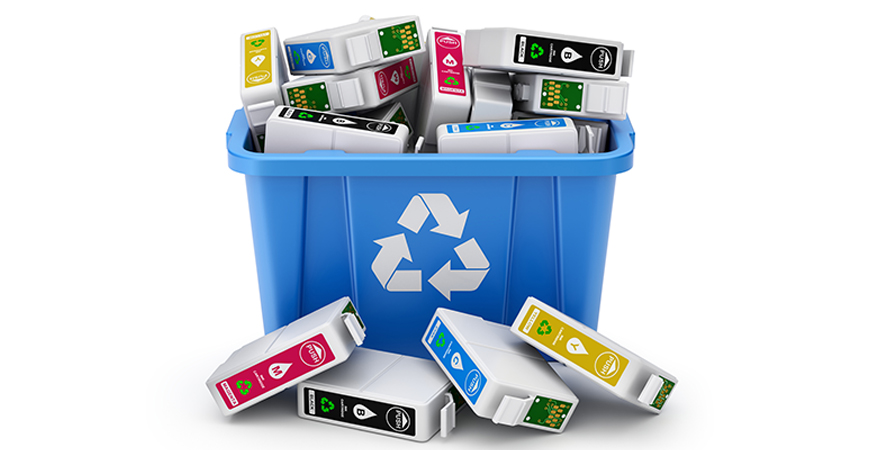
Toner and ink cartridges contribute significantly to plastic waste. Remanufactured cartridges, collected, cleaned, refilled, and tested, offer a cost-effective and environmentally friendly alternative to new ones.
Manufacturer refill programs allow empty cartridges to be refilled, reducing new plastic use and landfill waste. Soy-based inks, made from renewable resources, are an emerging, less toxic alternative to traditional petroleum-based inks.
Cartridge types have varying environmental impacts. Laser toner cartridges are more durable and contain less liquid waste than inkjet cartridges, though they are more complex to recycle. Proper disposal is essential for all cartridge types; recycle them through manufacturer programs or specialized facilities, never in the trash.
The consistent print quality of remanufactured cartridges can vary, with some users reporting issues in color accuracy or print density. Reading reviews and selecting reputable remanufacturers is recommended to ensure product reliability.
- Remanufactured Cartridges: Reused and refilled cartridges reduce waste.
- Refill Programs: Manufacturers refill your empty cartridges.
- Soy-Based Inks: Renewable and less toxic alternative.
- Proper Disposal: Recycling cartridges prevents landfill waste.
Smart Printing Habits: Less is More
Printing habits significantly impact your footprint. Printing less is the simplest and most effective reduction method. Before printing, consider if it's necessary or if the information can be shared digitally or noted on a screen.
Default to double-sided printing to cut paper consumption in half. Use print preview to avoid wasting pages on unnecessary elements like headers, footers, or blank space. Adjust margins and font sizes to fit more text per page. EPA policies also emphasize minimizing single-sided printing, permitting it only when legally required.
Embrace digital workflows by utilizing cloud-based document management systems for electronic storage and sharing. Encourage collaboration via online platforms instead of circulating paper copies. Digital signatures eliminate the need for printing and signing physical documents.
These seemingly small changes accumulate over time. Consciously reducing printing volume lowers environmental impact and saves money on paper and toner.
Cost Savings & Sustainability: A Happy Match
undefined-sided printing, you can effectively halve your paper consumption.
Extending the life of your printer through proper maintenance and responsible use can also save you money. A durable printer will require fewer replacements, reducing your capital expenditures. Choosing remanufactured cartridges can save you up to 30% compared to buying new cartridges. EcoFriendlyPrinter.com often highlights the cost benefits of sustainable printing options.
Let’s look at a quick example: A small business that prints 10,000 pages per month could save approximately $500 per year by switching to double-sided printing and using remanufactured cartridges. That’s a significant return on investment, and it’s a win-win for both the environment and your bottom line.
The initial investment in eco-friendly equipment or supplies might be slightly higher in some cases, but the long-term savings will quickly offset those costs. It’s a smart business decision that demonstrates a commitment to sustainability.
- Reduced Paper Consumption: Double-sided printing and digital workflows save money.
- Extended Printer Lifespan: Durable printers reduce replacement costs.
- Remanufactured Cartridges: Cost-effective and environmentally friendly.
- Long-Term Savings: Initial investments are offset by ongoing reductions in expenses.
Looking Ahead: Printing Tech in 2026
The printing industry is constantly evolving, and several emerging technologies promise to make printing even more sustainable in the coming years. Waterless printing, for example, eliminates the need for water in the printing process, reducing water consumption and waste. Biodegradable toners are also being developed, offering a more environmentally friendly alternative to traditional toner.
We’re also likely to see more efficient printer designs that use less energy and materials. Advancements in inkjet technology could lead to printers that require less frequent cartridge replacements. Artificial intelligence (AI) could play a role in optimizing printing settings and reducing waste. Imagine a printer that automatically detects and corrects errors before they result in wasted pages.
I think we’ll also see a greater emphasis on circular economy models, where printers are designed for disassembly and reuse. This would involve using modular components that can be easily replaced or upgraded, extending the printer’s lifespan and reducing electronic waste. The development of more sustainable packaging materials is another area to watch.
While predicting the future is always difficult, the trend towards sustainability is clear. By 2026, I expect to see a printing industry that is significantly more environmentally responsible than it is today, driven by both consumer demand and regulatory pressures. The potential for a truly sustainable printing industry is within reach, and the benefits – for both the planet and our wallets – are substantial.
No comments yet. Be the first to share your thoughts!